Our names are Jeffery Martin and Vanessa Riolo, and we are the Porter lab’s Green Lab Ambassadors! Together with Dr. Fidalgo, our Green Lab representative, and Dr. Porter’s full support, we are very excited to share more about sustainability initiatives and the various steps our lab is actively taking to reduce our environmental impact and sustainability. Hopefully, we inspire others to do the same!
Porter Lab has taken the initiative to join the Green Labs Program at the University of Windsor. The Green Labs campus initiative is a certification program that aims to fuel student, staff, and faculty participation to operate with more sustainable, efficient, and responsible laboratory practices. Green Labs and the Chemical Control Centre (CCC) empower participants with tools, knowledge, and peer learning to encourage sustainable behaviours while maintaining high-quality teaching and research spaces. Key areas of this program focus on water conservation, energy conservation, waste management, green chemistry, procurement, engagement, education and awareness.

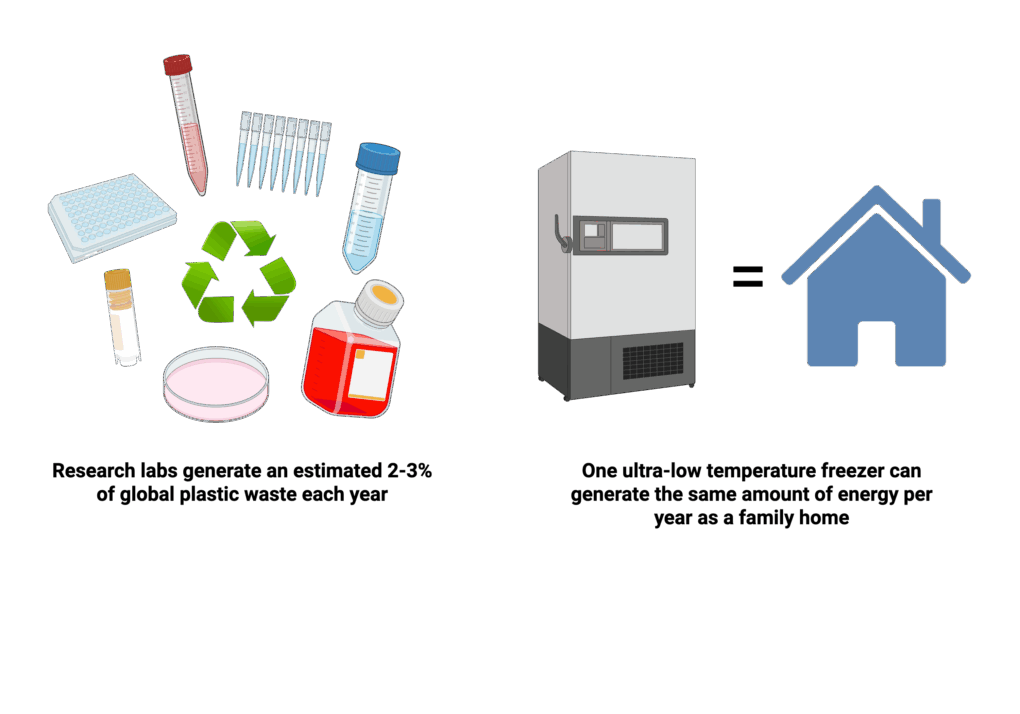
Did you know that research laboratories generate an estimated 2-3% of global plastic waste every year (ACS Publications)? Or that a single ultra-low temperature lab freezer can use as much as 14,000 kWh of energy per year, the same amount of energy as an average family home (ThermoFisher)? Statistics like these were quite alarming to discover, and that is why Porter Lab leaped to participate in the Green Labs initiative happening within the University of Windsor.
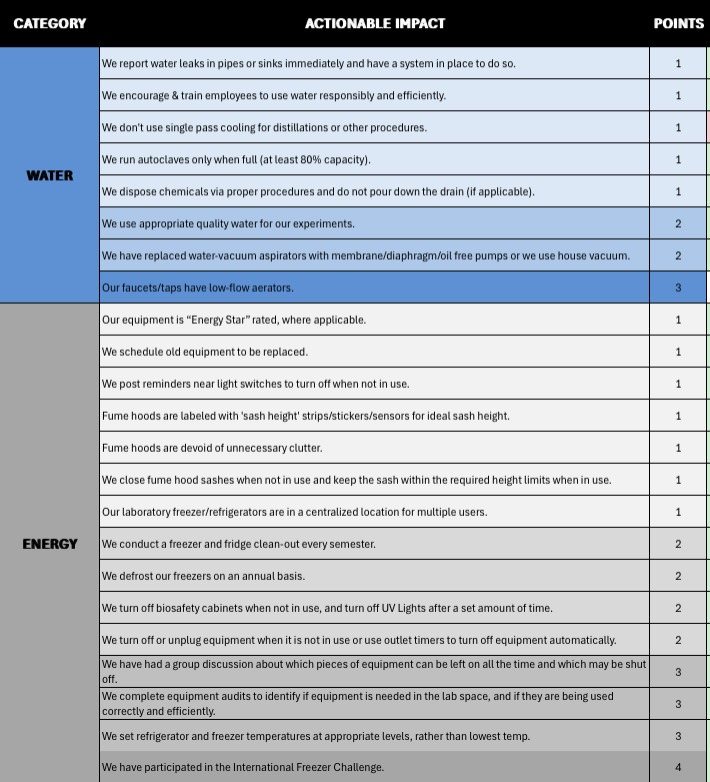
As participants in this program, we are provided with a scorecard that has actionable items which address each of the key areas listed above, and points are awarded based on completion of these items. The points are summed to then assign a ranking, ranging from bronze, silver, gold, or the top level, platinum.
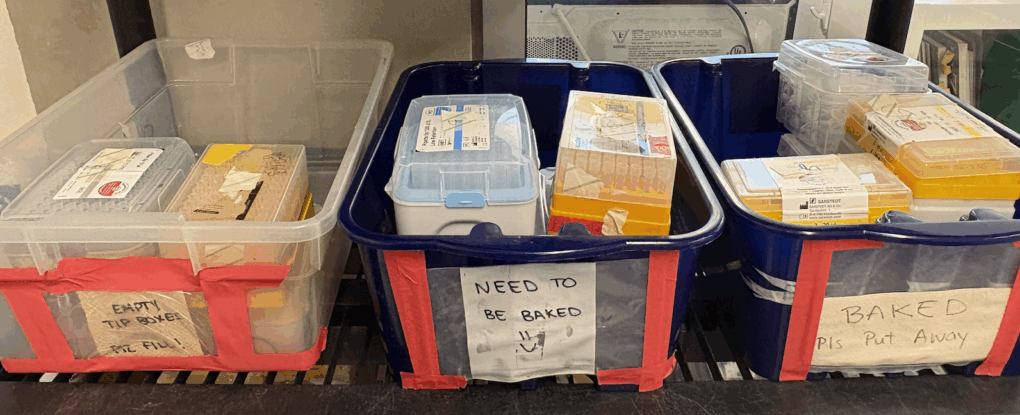
As a crucial method of reducing plastic waste in our everyday work, we give a second life to single-use plastic items, which would traditionally be quickly discarded. One of the best examples of how we do this can be seen through our reuse of pipette tip boxes. Whenever a tip box runs out, we simply fill it with more tips, bake it at 140 degrees Celsius to sterilize them, and then they’re ready to be reused!
The pipette tips themselves unfortunately come in plastic bags, but luckily, we have a solution for that too! See below a list of all the ways we reuse our plastic bags and other plastic items.
- When running our Western blot experiments to analyze protein expression, we reuse these bags to incubate our membranes with antibodies.
- We save plastic bags to help seal and dispose of virus and cytotoxic waste.
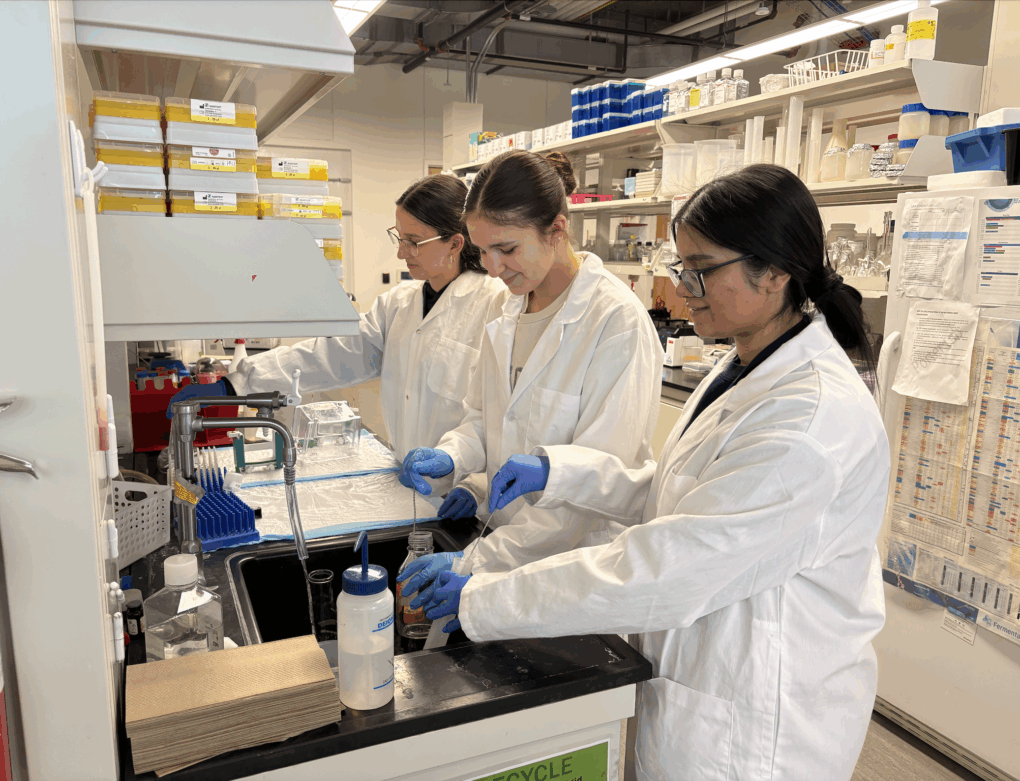
- We reuse plastic bottles (Ex. media bottles) by washing them and using them for future experiments or by using them to help dispose of virus and cytotoxic waste.
- We clean and sanitize all our non-biohazardous plastic 15 mL and 50 mL conical tubes for reuse.
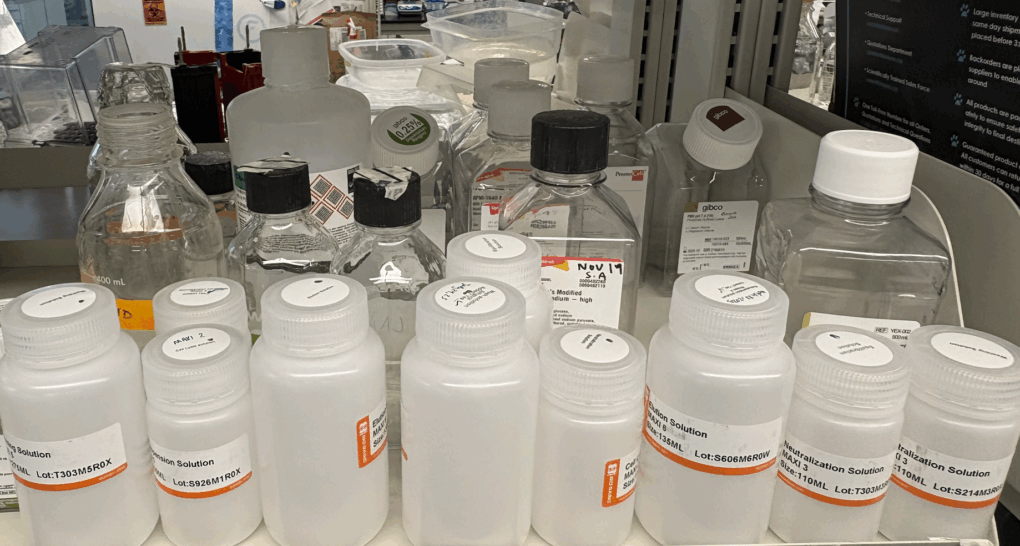
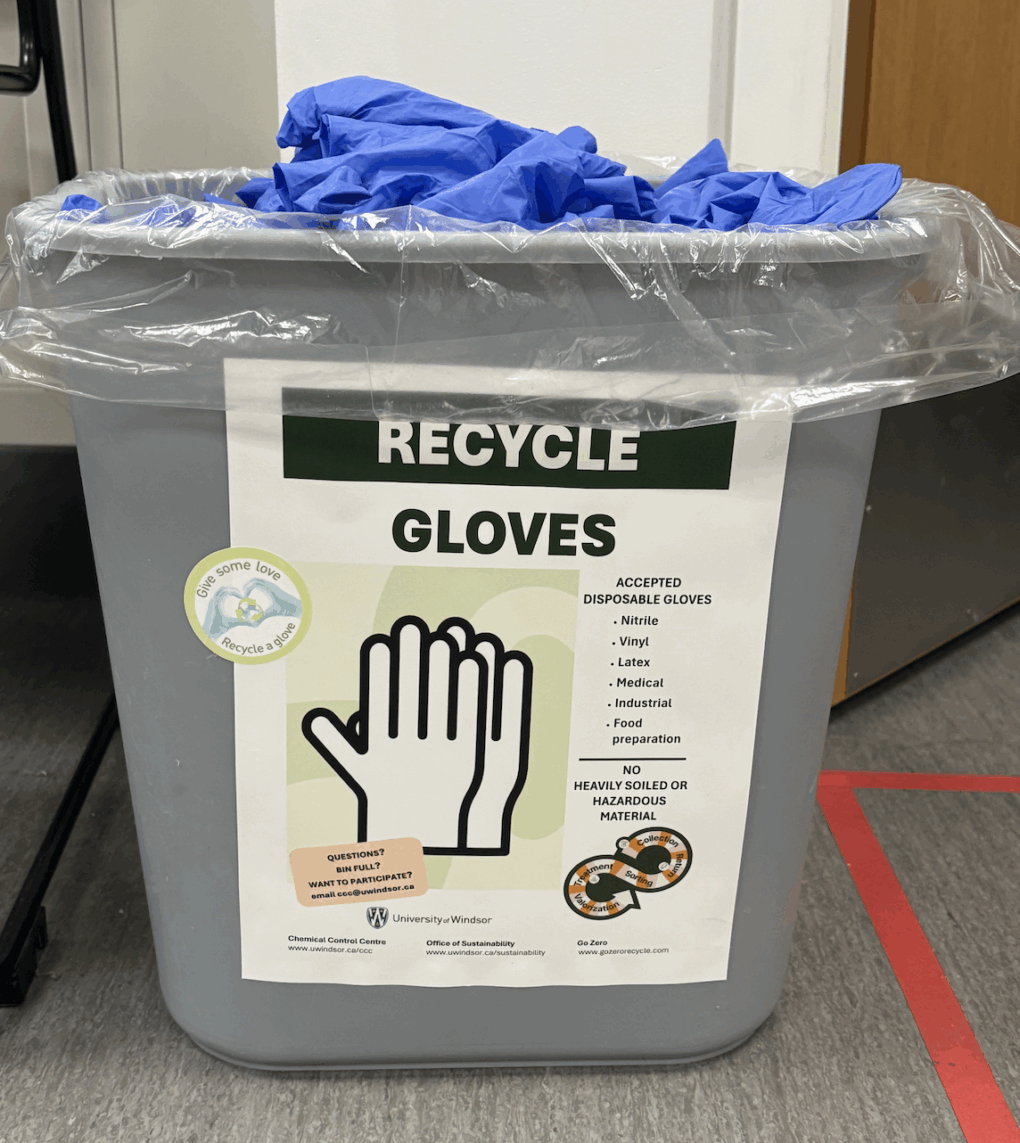
Further, see below a list of the ways we reuse other everyday items in our lab, like gloves and lab coats, and how we also commit to sustainable practices through using advanced technology.
- Rather than using a new pair of gloves each day or each experiment, we prioritize decontamination and reuse of gloves
- We reuse disposable lab coats and only replace them when the lab coat is damaged or contaminated
- Using online repositories, including OneNote and Teams, we store our updated protocols and inventory for our students’ use and reference, rather than maintaining physical notebooks
- At the end of each day, all equipment not in use is switched off (including biosafety cabinets, water baths, centrifuges, etc.)
- As one of several labs within the CORE Research facility, the lights in our office areas go off when nobody is around.
- In the CORE Research facility, we also have shared equipment rooms where expensive lab equipment can be used by many different labs. This helps to reduce the amount of equipment being produced to run each lab
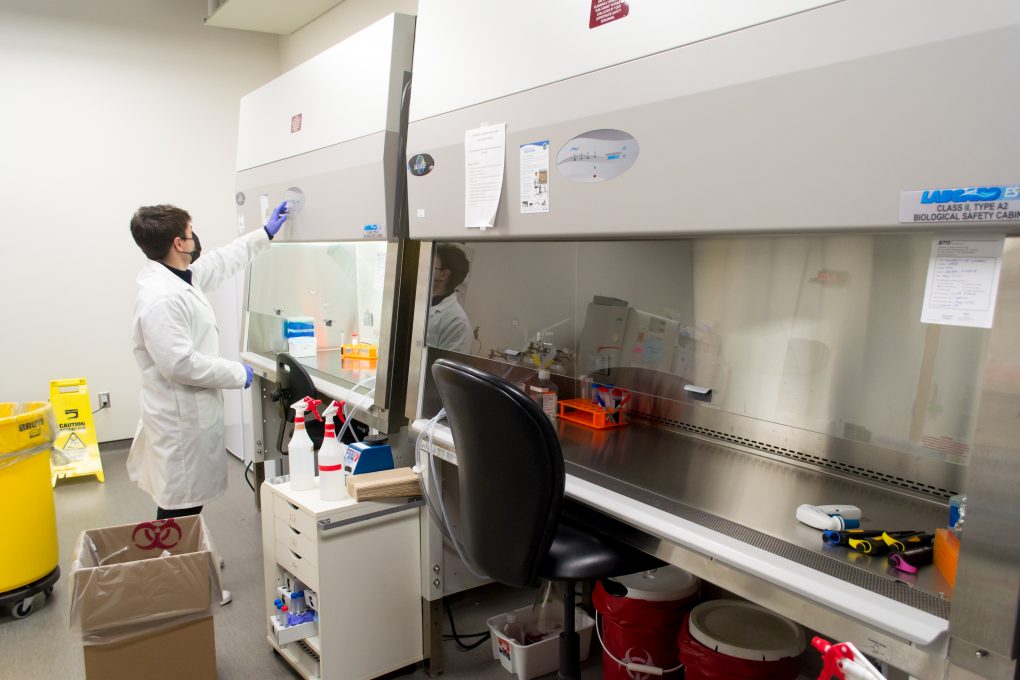
Further, we truly value the efforts of each member of our Porter lab team, especially our undergraduate student volunteers who prioritize these initiatives every day, making our efforts possible. Our volunteers spend most of their time cleaning tubes and plastic bottles to allow them to be reused, baking and sterilizing tip boxes, and autoclaving biohazardous waste to ensure its proper and safe disposal. Without the help of our volunteers, our sustainability initiatives would not be possible! And last but not least, our RAs: Dr. Fifield is responsible for the fridges and freezers organization, and Dr. Lubanska takes care of the undergraduate students’ training and our lab biosafety.
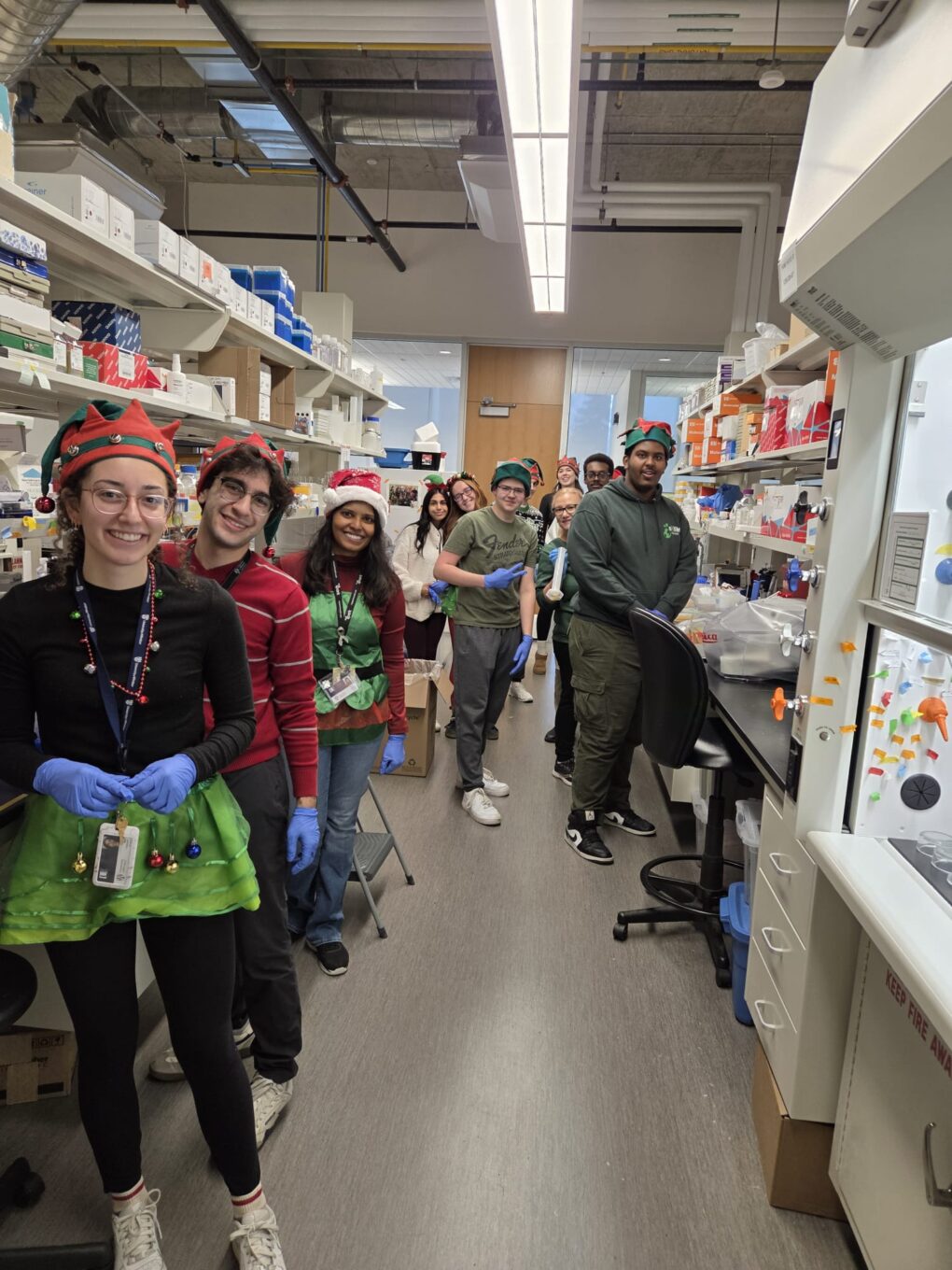
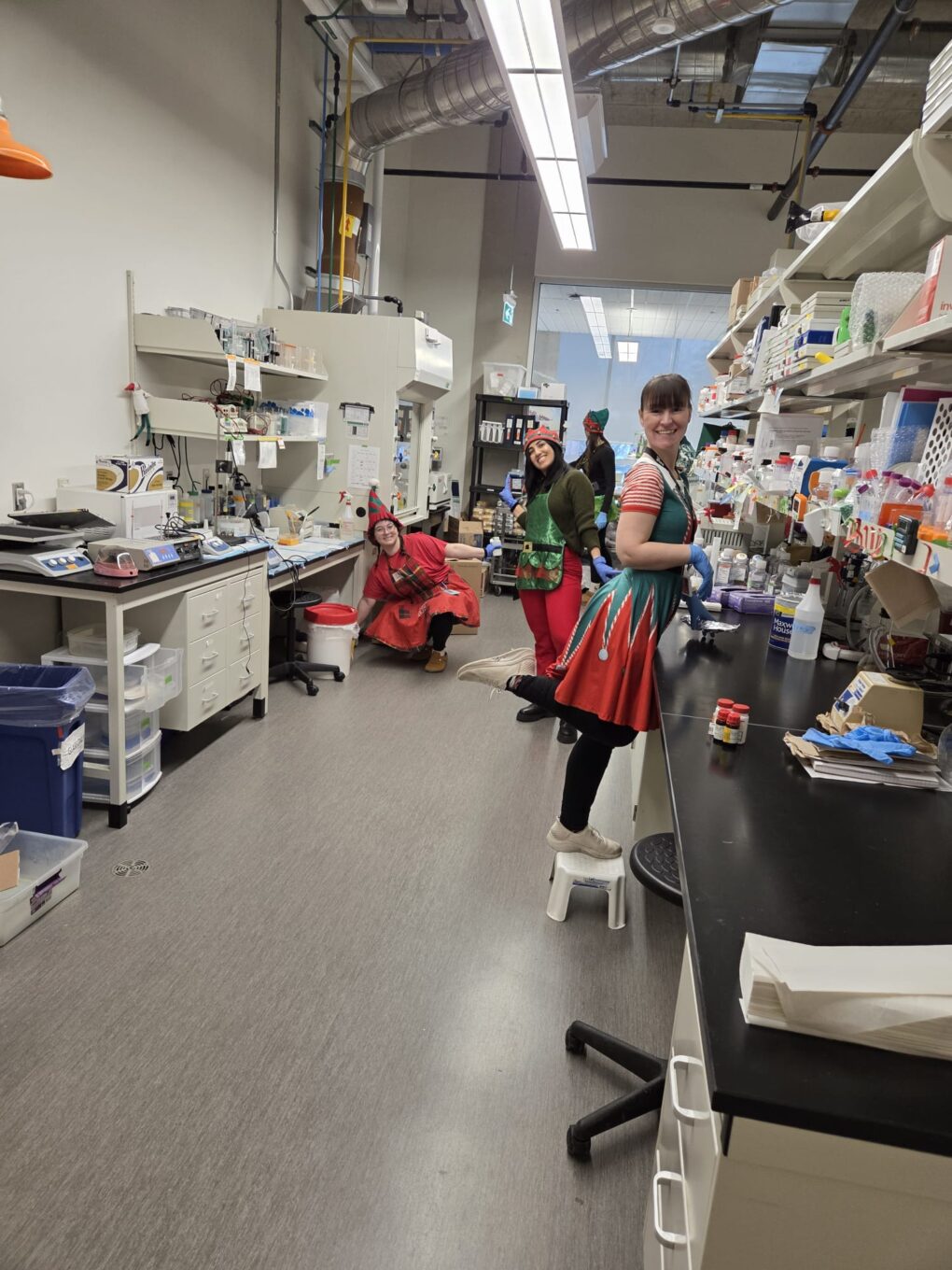
We aim to nurture a lab culture that values sustainability alongside driving research advancements. One of the ways we foster this attitude is through our annual “Elf Day.” Every December, the entire lab spends one day cleaning our lab space by disposing of old items, washing items that are deemed reusable, and recycling any waste that we may find. Of course, to add a layer of holiday cheer, we do all this dressed as Santa’s elves! Additionally, when planning this event and others, we follow the UWindsor Sustainability Event Guide to ensure we host a “Green Event,” through offering sustainable food items (such as plant-based food options at our gatherings), completing zero-waste activities, and applying the 4 Rs (Reuse, Reduce, Repair, Recycle) of sustainability.

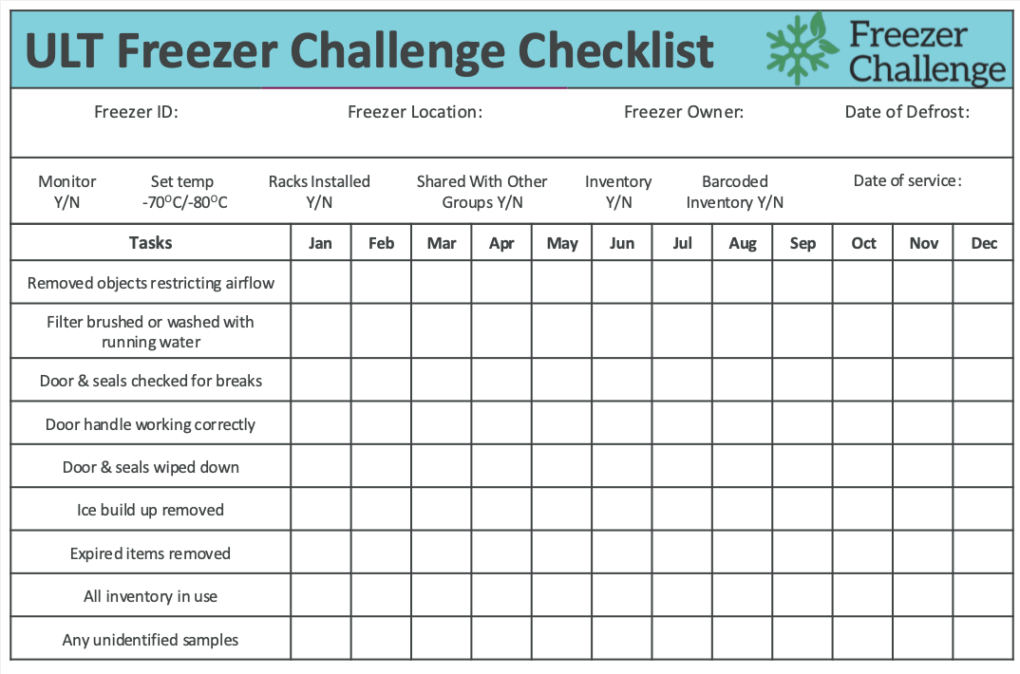
We are very pleased that, because of our sustainability initiatives listed above, we have been elevated to the Green Lab Platinum Level; however, we are not stopping there! One of the next prioritized efforts we are taking in conjunction with the goals of MyGreenLab is our participation in the ULT Freezer Challenger, to aim to reduce the energy usage of our low-temperature freezer through removing ice buildup, items that block airflow, clearing out expired or identifiable items, and more!
Going forward, we aim to continue spreading the word of this incredible and necessary program, and we encourage other labs at the University of Windsor (and nationwide) to participate! If you or someone you know works within a research lab, we encourage you to bring these program details forward to your lab supervisor and ask about signing up for this initiative. Every small task makes a big difference, and only together can we help reduce the environmental impact of research to help build a sustainable future for all.
Thanks for all the hard work lab!! You all amaze me and make me proud every day.
Thank you to your entire team for advancing sustainability on campus and setting an inspiring example!